Author Archives: AH

Rame Trust


The Rame Conservation Trust

…… is a buildings preservation charity founded in 1997 which was established to preserve for the benefit of the people of the Rame Peninsula and of the nation at large, the historical, architectural and constructional heritage that exists in and around Maker Heights and the Rame Peninsula.

A Trust with the purpose of conserving and promoting the heritage assets and values at Maker Heights – the natural environmental value, the historical value the aesthetic and communal values.

The Trust owns the Grade 11* listed Barrack Block at Maker Heights, and leases from the Edgcumbe Estate a further 12 hectares which include the Scheduled Ancient Monuments redoubt 1, redoubt 3, redoubt 5 and Grenville Battery. Also the Nissen huts which house the Canteen cafe/restaurant and the camp site which the Trust manages.

The Maker Heights Conservation Management Plan is a collaborative project to explore opportunities for maximising public benefit and enjoyment of the site whilst conserving, enhancing and celebrating its heritage values and securing a sustainable future for the buildings, monuments and landscape.

The Trust has just secured its first Heritage at Risk Repair grant from Historic England. This is for a condition survey, schedule of works, overperspexing and repair of the worst windows in the Barrack Block

Although Maker was originally a military base (from the late 18th century), it is also well known as the school holiday camp established by Nancy Astor and the Virginia House Settlement in the 1920’s for ‘deprived city children’.

Apart from a brief spell during World War II when it was recommissioned as a military base, it continued as this until its closure in 1987. As a result, thousands of children (mainly from Plymouth) had their first and sometimes only childhood holiday at Maker.

More recently Maker has hosted hundreds of musicians who have played and learned their craft at the venue, thousands of festival-goers (with an annual music festival starting in 1999) and artists who had studios there. There’s also been a campsite and facilities for people to hold their wedding.

Regardless of whether they’re young or old, regular or occasional visitor, what’s become clear through the project is that everyone holds Maker dear to their hearts.
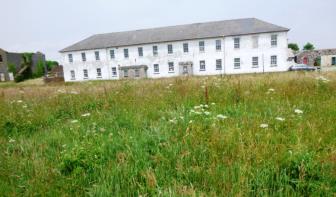
Maker Barracks View of front elevation

SAVE OUR CHURCH


CHERISHED & RESTORED OR LOCKED & LOST?

St Sampson’s Church, South Hill, as many of you will be aware, needs major repairs and improvements. In August our funding bid to the Heritage Lottery Fund was unsuccessful but they like our project and we were advised to reapply in the New Year under a new funding programme, with a scaled down project and more evidence of community need and support. There was one million pounds available to the South West with a total of five million being requested from fourteen applicants. We were asking for £500,000 so half the pot that was available!

Undeterred we will apply again. In consultation with our architect, the most urgent and essential items that need to be done are; the ceiling, which now has holes in it, the roof, which needs re–slating, the tower, to prevent water coming in, a toilet, which also means getting a water supply, and the window and stone work repairs, which will stop many of those pesky draughts. This scaled down work will still cost in excess of £300,000.

This is a huge sum, but not impossible to raise. Some people have said, “why doesn’t the Church of England pay for it?”  The answer is, “Each congregation is responsible for maintaining their church building and the Church of England does not provide money for repairs”. Others have said, “Taxes pay for churches”, the answer to that is, “no they don’t”. There is no central or official funding for church buildings. Another question may be, “we have a fantastic well used hall, why do we need another space?” and the answer is, “it is used almost to capacity and another public space will complement the hall”.   There are funding bodies out there that can help, but so can each member of our community. St Sampson’s needs to show not only why the repairs and improvements are needed but also that there is community support (the survey you all completed two years ago was a big help, thank you).  Funding bodies want to see the community rallying round, doing their best and doing their bit. The building with its rich heritage could be used much more by the community, especially if we have toilet facilities. Some of the things you suggested in the survey were concerts, exhibitions, a meeting space, educational classes. All this and more could happen if the repairs and improvements are done.  But… there is a real risk that without repairs, improvements and support St Sampson’s will be locked and lost in the future.

Does St Sampson’s hold a special place for you? Do you know about its Cornish heritage and history?

If you value St Sampson’s, for whatever reason, how can you help? Your time, your expertise, your ideas, your contacts, your enthusiasm. I have had a lot of conversations recently, making people aware of the situation, and this has resulted in some brilliant ideas and excitement for the project. We need to share ideas and enthusiasm and that is the purpose of the community meeting on Monday 29th October in the Parish Hall at 7.30pm. Please do come along, bring your friends and neighbours near and far, they don’t have to live in the parish.  We need you all for a group photo to show how valued St Sampson’s Church is.

Can’t make the meeting, but want to show support? contact Judith Ayers judithayers@yahoo.co.uk


Let’s make St Sampson’s Church Cherished and Restored.

Minefield


Minefield

How can a soldier deal with memories of war? What memories do they repress – and which do they cherish?

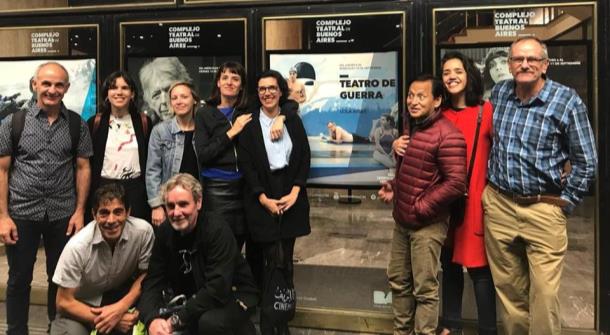
Three Argentine and three British veterans from both sides of the 1982 Falklands/Malvinas conflict came together for this remarkable show exploring the treacherous minefield of their memories, through theatre, film and live rock music.

MINEFIELD is an enthralling piece of documentary theatre by Argentinian actor and director Lola Arias – compassionate, cathartic and astonishingly moving. Performed to enormous acclaim in both Britain and Argentina and have taken the crew on tour to Paris, Frankfurt, Angers and Montpellier. The show takes you from the horrors of the battlefield to today’s uncertainties, with brutal honesty and startling humour. See more here

Cast: David Jackson, Lou Armour, Gabriel Sagastume, Ruben Otero, Sukrim Rai, Marcelo Vallejo

Dave Jackson lives in Trevigro, Congratulations on the success of Minefield and the wedding of your daughter in September. What an amazing time for you all.

Golliwogs


Golliwogs

The origins of the Golliwog begin with the British soldiers who occupied Egypt near the end of the 1800’s. Egyptian labourers working for the British bore the letters W.O.G.S. on their armbands, indicating that they were Working On Government Service. These labourers were spoken of as Ghuls- the Arabic word for desert ghosts – by the British troops. The children of the Egyptians played with black stuffed material dolls. These dolls in turn were given as gifts or purchased by the soldiers returning home to England. These dolls became known as Ghuliwogs, a name which become Golliwog

Florence Kate Upton, struck upon the character in 1895. Born into an eccentric English family who had recently emigrated to the United States, Florence found work as an illustrator and formulated the idea for a children’s book. Stuck for a main character, her aunt, found an old battered black-face rag doll in the attic. “ I called him ‘Golliwogg’” The Adventures Of Two Dutch Dolls And A Golliwogg, was soon published.

In this tale, the Golliwogg was initially described as ‘a horrid sight, the blackest gnome’, but turns out in fact to be good, loveable and brave, with a ‘kind face’.

He proved an instant hit with the British public, and Florence proceeded to publish a whole series of Golliwogg adventures.

They failed to trademark the Golliwogg character, and after the books had proved such a hit, toy companies jumped on the bandwagon. Slightly changing the name, they released a flurry of ‘Golliwog’ dolls, toys and badges.

Then, in 1910, John Robertson of jam manufacturing family saw children playing with a golliwog doll and decided it should be the company’s mascot. In the 1920s the company began producing Golliwog badges and enamel brooches which could be claimed by collecting tokens from jam jars. As more golliwog toys, watches and dinner sets were produced, the figure became part of everyday life and began to pop up in numerous children’s books.

It was in some of these stories, however, that they fell foul of the unpleasant racist stereotyping that has made the golliwog such a contentious figure in recent years. Children’s author Enid Blyton is seen as a major culprit, after portraying golliwogs in her Noddy stories as naughty thieves who once pinched Noddy’s prized yellow car.

Meanwhile, the word ‘wog’ began to be used as a derogatory word for black people. First popularised during World War II, it was uttered by some British soldiers as a slur against North Africans and other dark foreigners. By the 1960s, both the use of the term ‘golliwog’ and the dolls themselves were under increasing attack. Seen at best as racially insensitive and at worst as racist and vicious, golliwogs were gradually removed from public life. In 1983, the Greater London Council banned Robertson’s products from its jurisdiction, and in 1988 the character was no longer used in TV advertising.

Who still has their badges and models ?????

Third Light


Third Light A play by local Linkinhorne resident and historian Simon Parker was at The Minack Theatre September 10 -14th.

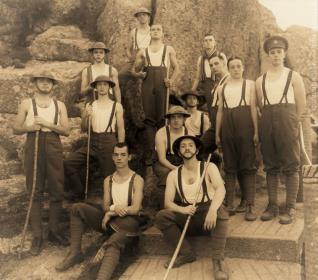
Amongst the 13 soldier cast, is local lad Thomas Bariball from Polhilsa.

Imagine a Cornish village whose men all came home from the trenches. Imagine a war memorial honouring the living, not the dead. Imagine a place symbolising hope amid horror. Through immersive drama, live brass band and contemporary dance, Third Light tells the unique and moving story of Herodsfoot. A play based on the true story of the thirteen men of Herodsfoot, who went to serve in the First World War and all came home. Conceived and written by local Linkinhorne historian, directed by Nicola Rosewarne, choreographed by Ben Dunks, designed by Meier Williams, produced by Sarah Pym. Performed by an ensemble of professional and community actors and dancers, with music played live by St Pinnock Brass Band led by David Johnson. Continue reading

Commonwealth War Graves


Commonwealth War Graves

Some of you will have seen the Commonwealth War Graves Commission sign which has gone up outside St Sampson’s church. If you try to find the usual Portland stone headstones you will search in vain.

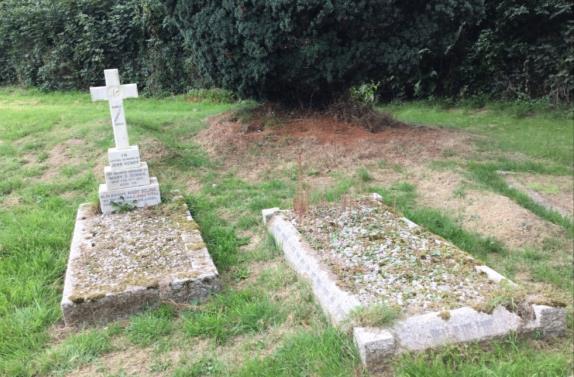
John Henry Rogers and Aaron Dennis are commemorated in the churchyard not with official war commission memorials but with personal gravestones.  There are no Commonwealth War Graves Commission memorials in St Sampson’s churchyard.

John Henry Dennis was Chief Stoker aboard HMS Earnest when he died on Tuesday 8th February 1916, age 39.

Aaron Rogers was a Petty Officer, on HMS Vivid, who died on Thursday February 10th, age 40.

For reasons unknown, neither of these men’s names appears on the war memorial in Golberdon.

Their graves can be found in the churchyard next to each other in the row of graves nearest to the road wall.


Thank You Miranda Lawrence-Owen for this information.

Percy Jenkin


The final resting place of Percy Jenkin

Percy’s parents, James and Mary Jenkin lived at Lower Downgate with their four daughters and five sons, most of whom who were born there and all baptised, either at home or Downgate Chapel, as Bible Christians. James was a miner although a few years later, he was recorded as being an invalid. That didn’t stop his eldest son George working in the mines too. Next in the family was Alfred who joined the Territorial Force. Then came Ephraim who joined the Royal Navy and was a stoker, first class, on HMS Vivid. Percy was next and he went to work for Mr. Lawry Rickard as a live-in waggonner at Manaton. The youngest brother Stanley got work at Trewassick for Mr. Nicholas Coad. He lived in, and looked after their cattle. Continue reading

Coads Green – Bathpool 5 miler 2 1/2 hours ish.


From Coads Green village hall exit to the right and fork off right. After 1/4 mile see the footpath on the right. Keep the hedge on the right to a gate and onto another gate into a yard by the farmhouse at West Tremollet Farm.

Once on the road, turn left and immediately right past the farm buildings see the footpath crossing the field. Keep the telegraph poles on your left down to a gate. Go straight across this field staying to the right of the barn at 1/2 Acre farm and follow the track, keeping right enter the field on the right. (This field was in corn when we visited so we back tracked to the gate by the barn and followed the wire fence to the corner where a gate lead us back into the same field.) A little way on there’s a stile in the hedge, keep on this line heading towards great views of the tor and cross 5 more fields with sheep and cattle and horses, none took any notice of us. The stile in the fence by the water trough was abit wobbly. Head to the bottom right corner gate onto the road.

Turn right and right again into a narrow lane and down to cross a stream at an old clapper bridge at Heronsford, then up to meet the road. Right takes you to Coads Green so go left to Bathpool village and turn right to the lovely bridge and The Old Mill House.

Back track from the bridge and stay on the road as far as Meneth Chy on your right, and follow a track to a diverted footpath taking you up onto a lane and go left. At the crossroads turn right, unsuitable for vehicles, and stay on this track to a T junction and turn left.

Past South Combe Mill look out for the pond and see a cross on your left by North Combe. At Westcombe, on the corner, take the footpath into the grass field on the left and see a stile in the hedge at about the 2oclock position, by a tree. Keep leftish cutting the corner you ‘ll see a stile into the next field. Straight ahead spot the stile by some pallets taking you out onto the road.

Turn right. At the junction turn left and follow the road back to Coads Green and the start.

The Copper Trail


The Copper Trail is a 60 miles circular walk around Bodmin Moor.

Divided into 6 sections Ali and friends are walking the route in Sept/Oct. If interested in the whole route or a section, or joining us along the way somewhere please contact iamalihumphreys@yahoo.com

Minions to St Neot 8 1/2 miles

St Neot to Bodmin 13 miles

Bodmin to Camelford 6 miles

Camelford to Five Lanes  10 1/2 miles

Five Lanes to Minions 9 miles

There’s a book written by Mark Camp who we have contacted and will be joining us for some sections and sharing his knowledge and enthusiasm. If you would like a copy, let me know and read up on some of the history on our doorstep.

setting off my pathetic attempt at a selfie with the group 🙂

Walking Festival


Sun 9th: Liskeard to Looe Walk. Meet Liskeard Station (main entrance) 10.30am. Walk is about 11 miles and takes around 6 hours. Please bring refreshments. At the end of the walk, journey back to Liskeard by train or bus.

Sun 9th: Mt Edgcumbe Country Park Walk. Organised by the Ramblers, more details HERE

Mon 10th: Antony Passage Walk. Organised by Saltash Walk & Talk Group. More details HERE

Tue 11th: TBC

Wed 12th: West of Fowey Walk. Organised by the Ramblers, more details HERE

Wed 12th: Artists of Polperro Talk. Festival organiser Mark Camp will be giving a talk about the history of artists in Polperro. Starts 7.30pm Pelynt Village Hall nr Looe.

Thur 13th: Polruan Village Walk. Meet Polruan Quay More details HERE

Thur 13th: Unlocked Liskeard Walk. Discover the history of Liskeard as part of Heritage Open days. More details HERE

Fri 14th: Liskeard Geology Walk. A different way at looking at a towns buildings. More details HERE

Sat 15th: Duloe Ale & Cider Fest Walk. Celebrate the 18th birthday of the walking festival with a shortish walk through the Looe Valley to the ale fest. Catch train from Looe at 10.20am

Sun 16th: Drangways of Liskeard Walk. Explore the ‘alternative Liskeard Heritage trail’ More details HERE

https://www.visitcornwall.com/whats-on/sports/south-coast/looe/south-east-cornwall-walking-festival

PLUS Ali is walking on Sunday 23rd and Monday 24th Sept – walking THE SAINTS WAY  from Padstow to Fowey (28 miles ish). If you would like to join us for the whole walk or a part,  let Ali know ASAP Thank You iamalihumphreys@yahoo.com  https://www.oliverscornwall.co.uk/saintsway.html